
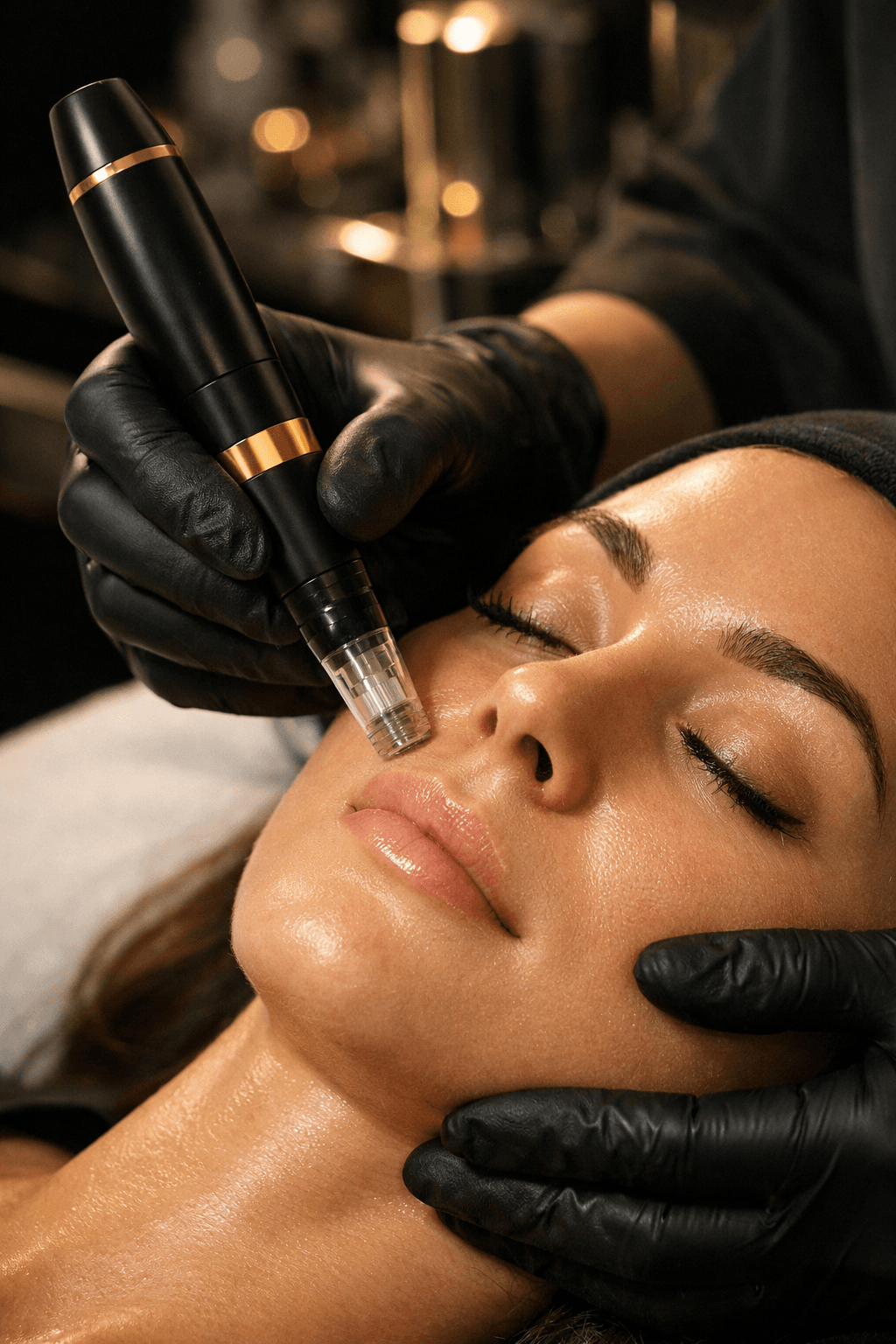
Professional Microneedling in Hackney London: Realistic Results, Healing Time and Safety Guide
by Jennifer Eze | Feb 25, 2026 | Skin Rejuvenation
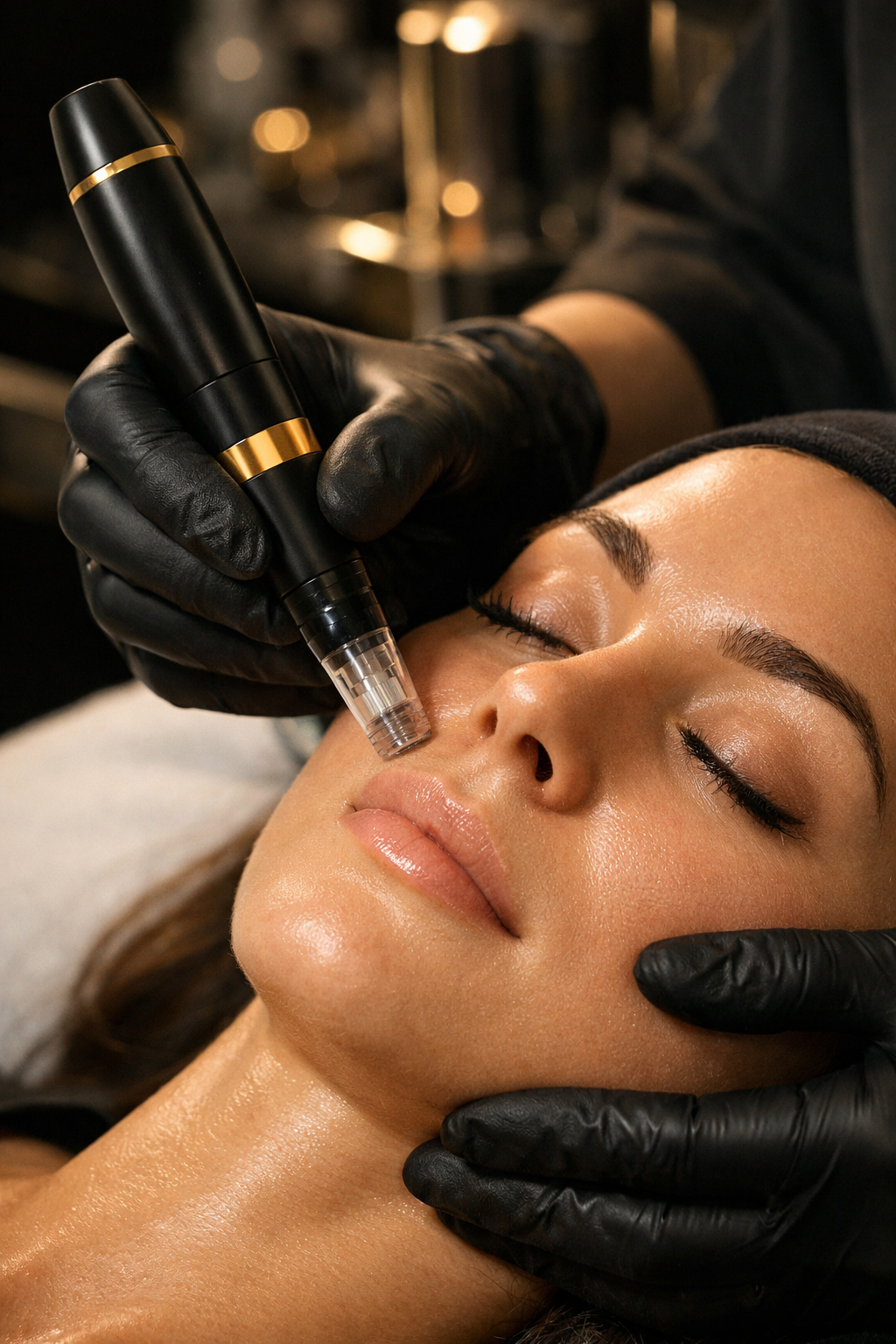
Introduction
Microneedling is frequently positioned as a low-risk, high-reward skin treatment. In practice, outcomes are highly dependent on clinical judgement, protocol design, and execution. When these factors are not properly controlled, results are inconsistent and often underwhelming.
This is not a treatment where the name alone guarantees success.
In real clinical settings, microneedling works best when it is individually prescribed, performed with variable depth and technique, and integrated into a structured skin regeneration plan. Performed without assessment or with a generic approach, it can fail to deliver meaningful improvement.
This guide is designed to set realistic expectations before booking. It explains what microneedling can reliably achieve, the downtime involved, how results develop over time, and why professional assessment is essential to outcome quality. If you are considering microneedling, this page is intended to help you decide whether it is appropriate for your skin, and if so, what standard of treatment you should expect.
Table of Contents
- What Microneedling Is
- What Microneedling Can and Cannot Treat
- Suitability and Clinical Assessment
- How Microneedling Is Performed in Clinic
- Pain, Sensation and Client Experience
- Downtime and Healing Timeline
- When Results Appear and How Long They Last
- Risks, Safety and Contraindications
- Why Results Vary Between Individuals
- How We Deliver Microneedling at J Luxe
- Booking and Next Steps
What Microneedling Is
Microneedling is a controlled, regenerative skin treatment that works by creating precise micro-channels within the skin to stimulate the body's natural wound-healing response. Its clinical purpose is to improve skin quality, not to add volume, lift tissue, or alter facial structure.
At a biological level, microneedling initiates a cascade of repair mechanisms. The controlled injury triggers platelet activation, inflammatory mediators, and fibroblast stimulation, leading to the production of new collagen and elastin over time. This process strengthens the dermal matrix and improves surface texture, resilience, and overall skin function.
Importantly, microneedling is dose dependent. The depth, pressure, number of passes, and spacing between treatments directly influence tissue response. When these variables are poorly controlled, collagen stimulation is either insufficient or excessive, both of which compromise results.
Microneedling should therefore be understood as a biological stimulus, not a cosmetic enhancement. It does not fill, lift, or tighten skin in the way injectable or energy-based treatments do. Its role sits firmly within skin regeneration and optimisation, making correct indication and protocol design essential.
This distinction is critical. When microneedling is positioned or used outside its clinical scope, expectations become misaligned and outcomes disappoint.
What Microneedling Can and Cannot Treat
Microneedling is effective when used within its clinical scope. It is a treatment for skin quality optimisation, not a solution for structural ageing or volume-related concerns. Clear distinction at this stage is essential for appropriate treatment selection and client satisfaction.
What Microneedling Treats Effectively
When correctly indicated and performed, microneedling can produce consistent improvement in:
- Uneven skin texture
By promoting dermal remodelling, microneedling smooths surface irregularities and refines overall skin quality. - Enlarged or visible pores
Collagen stimulation around follicular openings can reduce pore visibility over time. - Mild to moderate acne scarring
Particularly rolling or superficial box scars. Deeper or tethered scars require adjunctive or alternative treatments. - Fine static lines
Lines present at rest, not dynamic expression lines. - Dull or fatigued skin
Improved microcirculation and tissue renewal leading to brighter, healthier-looking skin. - Early skin laxity
Where elasticity is beginning to decline but structural support remains intact.
These outcomes are progressive and cumulative, improving with appropriately spaced treatment courses rather than single sessions.
What Microneedling Does Not Treat
Microneedling does not correct concerns driven by structural or volumetric change, including:
- Volume loss
Microneedling does not replace dermal fillers or bio-stimulatory injectables. - Deep folds or fixed creases
Such as advanced nasolabial or marionette folds. - Moderate to severe skin laxity
Where tissue descent or significant collagen loss is present. - Facial contour changes
Microneedling does not lift, reshape, or reposition tissue.
Using microneedling for these indications leads to underwhelming outcomes and inappropriate treatment plans. In these cases, combination or alternative treatments are clinically indicated.
Suitability and Clinical Assessment
Microneedling should never be approached as a routine or generic treatment.
Clinical suitability must be established before proceeding, as outcomes and safety are directly influenced by individual skin characteristics and healing capacity.
A structured assessment is therefore non-negotiable.
What Is Assessed Before Microneedling
A proper clinical assessment evaluates multiple variables, including:
- Skin thickness and quality
Skin varies significantly by facial region and between individuals. Needle depth must be adjusted accordingly to avoid under or over treatment. - Barrier integrity
Compromised or sensitised skin increases the risk of inflammation, delayed healing, and pigmentary change. - Inflammatory skin conditions
Active acne, dermatitis, rosacea flares, or infection require modification or deferral of treatment. - Pigmentation risk
Skin prone to post-inflammatory hyperpigmentation requires tailored protocols and conservative depth selection. - Healing capacity
Factors such as medical history, medication use, smoking status, and previous wound-healing responses affect suitability. - Previous aesthetic treatments
Recent procedures, injectable history, and cumulative skin trauma must be considered when planning microneedling.
When Microneedling May Be Deferred or Contraindicated
Microneedling may be inappropriate or postponed in cases of:
- Active infection or open lesions
- Uncontrolled inflammatory skin disease
- Certain autoimmune or connective tissue disorders
- Impaired wound healing
- Recent isotretinoin use
Proceeding despite these factors increases the risk of complications and compromised results.
Why Assessment Determines Outcomes
Microneedling is prescribed, not selected from a menu.
Without assessment, treatment becomes mechanical rather than clinical, and outcome quality declines.
Establishing suitability ensures:
- Correct indication
- Appropriate depth and technique
- Reduced risk profile
- Realistic expectations
This is what differentiates a clinical microneedling protocol from a standardised service.
How Microneedling Is Performed in Clinic
A clinical microneedling treatment is methodical, adaptive, and indication led. The objective is to stimulate dermal regeneration while maintaining strict control over tissue response. This requires more than device operation; it requires continuous clinical judgement throughout the procedure.
Pre-Treatment Preparation
Before needling begins, the skin is prepared to minimise risk and optimise response:
- Thorough cleansing to remove surface debris and oils
- Medical-grade skin disinfection to reduce infection risk
- Topical anaesthesia applied where clinically indicated, allowing controlled treatment rather than reactive technique
Preparation is not rushed. Poor preparation compromises both comfort and outcomes.
Treatment Delivery
Microneedling is performed using variable depths and controlled passes, adjusted in real time based on anatomical area and tissue response.
Key elements include:
- Depth modulation by facial zone
Thinner areas (e.g. Periorbital, forehead) require shallower depths than thicker regions (e.g. Cheeks). - Pressure and speed control
Excessive pressure or speed increases trauma without improving collagen stimulation. - Pass limitation
The number of passes is dictated by skin response, not a preset protocol. - Endpoint monitoring
Treatment is guided by visual and tactile cues (uniform erythema, not pinpoint bleeding or tissue stress).
Uniform depth across the face or aggressive repetition reflects poor technique and increases risk without improving results.
Post-Treatment Skin Support
Immediately following microneedling:
- Targeted post-procedure serums are applied to support healing
- The skin barrier is protected rather than overstimulated
- Aftercare instructions are provided clearly and in writing
This phase is critical. Collagen stimulation occurs after the treatment, post-procedure care directly influences outcome quality.
Treatment Duration
A properly delivered session typically lasts 60 minutes, excluding consultation time.
Shorter sessions often indicate insufficient assessment or rushed technique.
Microneedling is effective when delivered as a controlled medical procedure, not a mechanical service. Technique consistency, real-time assessment, and respect for tissue response are what differentiate high-quality outcomes from variable results.
Pain, Sensation and Client Experience
Microneedling is generally well tolerated when performed correctly. The experience should be controlled, predictable, and proportionate to the treatment area, not overwhelming or excessive. Client comfort is a clinical consideration, not an afterthought.
What Sensation to Expect
During treatment, most clients describe:
- A vibrating or scratching sensation
- Mild to moderate discomfort that varies by facial region
- Increased sensitivity in thinner or more mobile areas
Sensation is influenced by skin thickness, nerve density, and individual sensitivity, which is why depth and technique must be adjusted throughout the face.
Pain Management
Where appropriate, topical anaesthesia is used to:
- Reduce discomfort
- Allow controlled, precise technique
- Prevent reactive movement that compromises accuracy
Anaesthetic use is guided by clinical judgement rather than routine application.
Pain vs Effectiveness
Pain intensity is not an indicator of treatment success.
Excessive discomfort may indicate:
- Excessive depth
- Incorrect pressure
- Inappropriate speed
- Inadequate preparation
Aggressive treatment does not increase collagen stimulation and may increase inflammation, downtime, and risk.
Overall Client Experience
A well-performed microneedling session should feel:
- Managed rather than rushed
- Purposeful rather than aggressive
- Structured and professional
Clients should leave understanding:
- What was done
- What to expect over the coming days
- When to resume normal skincare and activities
Clarity at this stage reduces anxiety and improves adherence to aftercare.
Downtime and Healing Timeline
Microneedling produces a controlled inflammatory response. This is expected, temporary, and necessary for collagen stimulation. Understanding the normal healing sequence helps prevent unnecessary concern and ensures appropriate aftercare.
Day 0-1: Inflammatory Phase
Immediately following treatment, it is normal to experience:
- Diffuse redness
- Warmth or heat in the skin
- Mild to moderate swelling
- Sensitivity to touch
The skin may appear similar to moderate sunburn. This response indicates that the wound/healing process has been initiated.
During this phase, avoid:
- Make-up
- Heat exposure (saunas, hot showers, exercise)
- Active skincare ingredients
- Excessive touching of the skin
Day 2-3: Resolution Phase
As inflammation begins to settle, individuals may notice:
- Redness gradually reducing
- Tightness or dryness
- Mild sensitivity
This is a transitional phase as the skin barrier starts to recover.
Day 4-7: Normalisation Phase
By this stage:
- Skin tone largely normalises
- Sensitivity reduces significantly
- Early improvement in skin brightness may be visible
Most clients are able to return fully to their usual skincare routine, excluding strong actives unless advised otherwise.
Make-up and Daily Activities
Make-up is generally appropriate after 48 hours, depending on individual healing response. Earlier application may interfere with barrier recovery and increase irritation risk.
What Is Normal vs When to Seek Review
Normal responses include:
- Mild dryness
- Light flaking
- Temporary sensitivity
Seek clinical review if you experience:
- Increasing pain
- Persistent redness beyond expected timelines
- Oozing, discharge, or crusting
Prompt review ensures appropriate management and protects outcomes.
Downtime following microneedling is usually short and predictable when the treatment is performed correctly and aftercare is followed.
When Results Appear and How Long They Last
Microneedling results develop according to biological repair timelines, not immediately after treatment. Understanding this progression is essential for setting realistic expectations and evaluating treatment success accurately.
Early Changes: 7-10 Days
In the first week following treatment, some clients notice:
- Improved skin brightness
- Smoother surface texture
- A temporary fresh appearance as inflammation resolves
These changes are early indicators, not the final result. At this stage, collagen remodelling has not yet occurred.
Progressive Improvement: 3-4 Weeks
As the repair process continues:
- Fibroblast activity increases
- New collagen formation begins
- Skin texture and resilience gradually improve
This is when measurable improvements in skin quality typically become more apparent.
Structural Remodelling: 4-6+ Weeks
True collagen remodelling occurs over several weeks. During this phase:
- Dermal support strengthens
- Elasticity improves
- Results become more stable and sustained
This process cannot be accelerated without compromising tissue integrity.
Longevity of Results
Results from microneedling are cumulative, not permanent. Longevity depends on:
- Baseline skin condition
- Number of sessions completed
- Treatment spacing
- Aftercare adherence
- Lifestyle and environmental factors
For this reason, microneedling is most effective when delivered as a planned course, followed by maintenance where appropriate.
Why Single Sessions Underperform
A single microneedling session may improve skin appearance temporarily but rarely delivers meaningful structural change. Collagen induction requires repeated, appropriately spaced stimulation to achieve sustained improvement.
This is why treatment planning matters more than session count.
Evaluating microneedling results too early or after isolated treatments often leads to false assumptions about effectiveness. When assessed at the correct intervals and delivered as part of a structured plan, outcomes are predictable and reproducible.
Risks, Safety and Contraindications
Microneedling is a controlled medical procedure, not a superficial facial. When performed correctly and on appropriately selected candidates, it carries a low risk profile. When performed without assessment or with poor technique, complications become more likely. Risk management is therefore integral to treatment planning.
Common and Expected Reactions
The following responses are anticipated and self-limiting:
- Transient redness
- Mild swelling
- Temporary sensitivity
- Light flaking or dryness during barrier recovery
These effects resolve as part of the normal healing process.
Potential Risks (When Protocol Is Not Followed)
Although uncommon, risks increase when depth, pressure, or spacing are mismanaged. These may include:
- Prolonged inflammation
- Post-inflammatory hyperpigmentation, particularly in pigment-prone skin
- Delayed healing
- Infection, if aseptic technique is compromised
- Skin barrier disruption due to premature use of active skincare
Most complications are preventable with appropriate assessment, conservative depth selection, and strict aftercare adherence.
Contraindications and Situations Requiring Deferral
Microneedling may be unsuitable or require postponement in cases of:
- Active skin infection or open lesions
- Acute inflammatory skin conditions
- Certain autoimmune or connective tissue disorders
- Impaired wound healing
- Recent isotretinoin use
- Uncontrolled medical conditions affecting skin repair
Proceeding despite these factors increases risk without improving outcomes.
Safety Through Clinical Oversight
Safe microneedling relies on:
- Accurate candidate selection
- Indication-led depth and technique
- Continuous monitoring of tissue response
- Clear post-treatment guidance and access to review
Clinical judgement, not device capability, is what maintains safety and outcome consistency.
Microneedling should only be undertaken when the risk-to-benefit ratio is appropriate. This is determined during consultation, not at the point of treatment.
Why Results Vary Between Individuals
Microneedling outcomes are not uniform, even when the same device is used. Variability in results reflects differences in skin biology, treatment execution, and post-procedure care rather than the treatment itself. Understanding these variables is essential for setting appropriate expectations and interpreting results accurately.
Baseline Skin Condition
Skin with good barrier function and minimal chronic inflammation responds more predictably to microneedling. Factors such as dehydration, long-term sun damage, or previous over-treatment can reduce responsiveness and slow recovery.
Accuracy of Depth and Technique
Effective collagen stimulation requires precise depth control. Depths that are too shallow fail to trigger sufficient dermal response, while excessive depths increase trauma without improving outcomes. Consistency in pressure, speed, and pass number also directly influences tissue response.
Treatment Spacing
Collagen remodelling requires time. Treatments performed too closely together interrupt the healing process, prolong inflammation, and reduce long-term benefit.
Appropriate spacing allows the skin to recover and remodel effectively.
Aftercare Compliance
Post-treatment behaviour significantly impacts outcomes. Inadequate barrier support, premature use of active ingredients, or excessive sun exposure can compromise healing and collagen formation.
Lifestyle and Systemic Factors
Smoking, chronic stress, poor sleep, nutritional deficiencies, and hormonal influences all affect skin repair capacity. These factors partially explain why outcomes differ between individuals.
Device vs Protocol
Devices facilitate treatment; they do not determine results.
Outcome quality is driven by:
- Clinical assessment
- Protocol design
- Execution
- Recovery support
Protocols create results not machines.
Recognising these variables helps contextualise outcomes and reinforces why microneedling should be delivered as a personalised clinical treatment, not a standardised service.
How We Deliver Microneedling at J Luxe Medical Aesthetics
Microneedling at J Luxe is delivered as a prescribed clinical protocol, not a menu item. Every treatment decision is grounded in assessment, risk management, and long-term skin health, not device led routines or generic settings.
Assessment First, Not Treatment-First
We begin with a structured consultation to determine indication and expected benefit, anatomical variability and skin thickness, barrier integrity and inflammatory risk, pigmentation risk and healing capacity, treatment history and cumulative skin load. If microneedling is not the right intervention, we do not proceed.
Individualised Protocol Design
Each plan is built around variable depth mapping by facial zone, conservative depth escalation across sessions, indication-led spacing to allow full collagen remodelling, combination planning where microneedling alone is insufficient. Uniform depth or standard packages are avoided because they dilute outcomes.
Technique Standards
Delivery is controlled and adaptive: depth, pressure, speed, and passes are adjusted in real time. Endpoints are monitored continuously to avoid over-trauma. Post-procedure skin support prioritises barrier recovery. The objective is consistent regeneration, not aggressive stimulation.
Structured Planning & Review
Microneedling is planned as a course, not an isolated event. Progress is reviewed at clinically appropriate intervals to assess tissue response, adjust depth and spacing, and decide when to maintain, escalate, or stop. This protects results and reduces unnecessary treatment.
Safety, Documentation, and Access
Clear written aftercare and recovery guidance. Defined review pathways if concerns arise. Documentation aligned with nurse-led clinical standards. Our approach is deliberately methodical because predictable outcomes come from controlled processes.
Booking and Next Steps
Book a microneedling consultation to assess suitability and build a personalised plan.
- Book a consultation
- WhatsApp us to discuss whether microneedling is appropriate before booking
- Facials in Hackney London if you want a lower-friction local starting point for skin treatment and consultation