
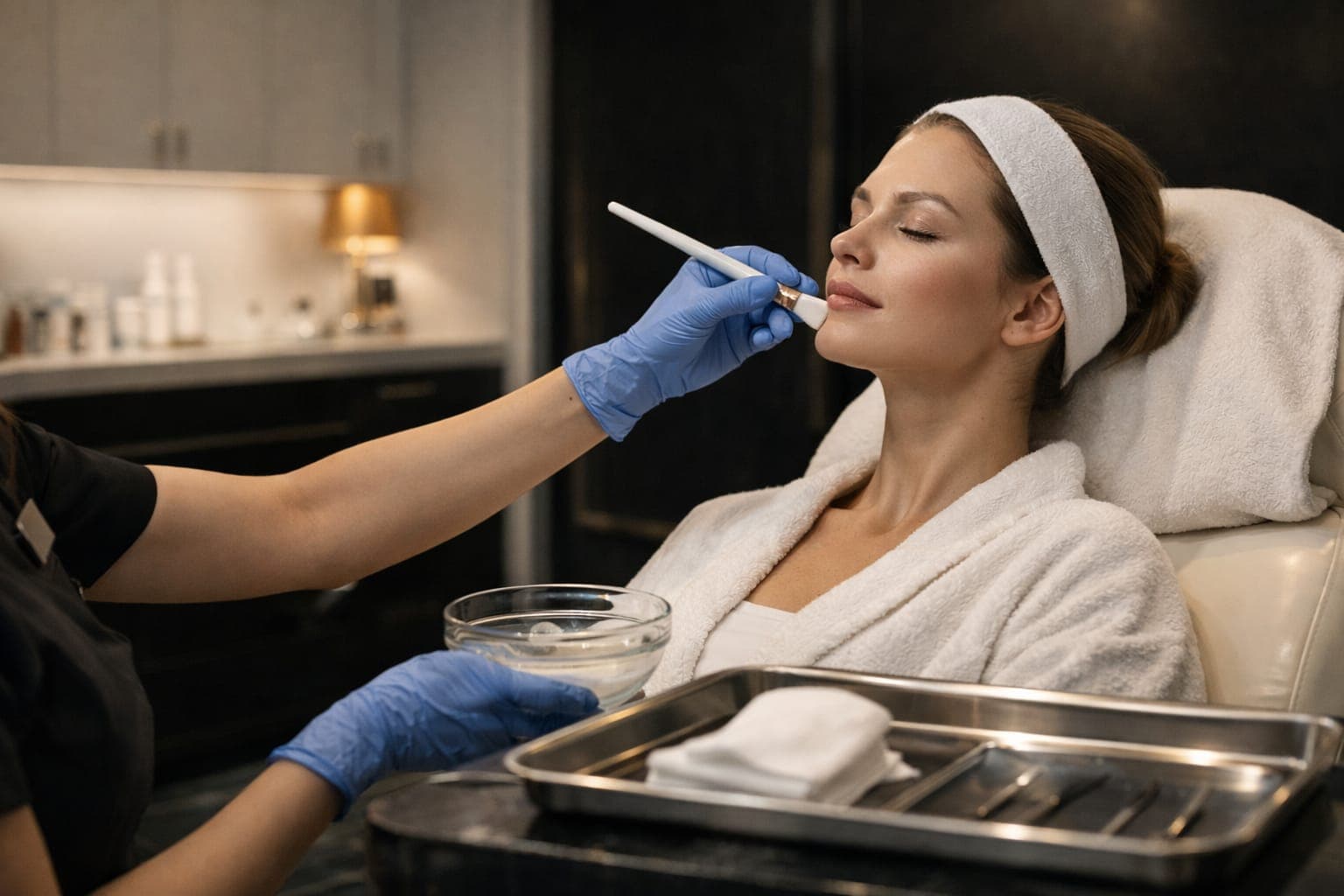
Preparing for chemical peel: how to prepare for your first treatment
Preparing for chemical peel properly is one of the strongest predictors of a smooth recovery and high-quality outcome. Most complications associated with peels are linked to poor preparation, inappropriate indication, or non-compliant aftercare.
A peel is not just an appointment. It is a controlled skin-injury protocol that requires planning before and discipline after treatment.
This guide explains:
- what to do before your first peel
- what to avoid
- what healing should look like
- when to seek clinical review
Table of contents
- What a chemical peel is
- What peels can and cannot treat
- Clinical suitability assessment
- How to prepare in the 7 days before treatment
- What to expect during treatment
- First 72 hours aftercare priorities
- Day 4-7 recovery guidance
- Risks, safety and contraindications
- Why outcomes vary between individuals
- How we deliver peel protocols at J Luxe
- Booking and next steps
What a chemical peel is
A chemical peel is a controlled exfoliative treatment that accelerates epidermal turnover and supports dermal renewal. Different peel depths and actives are chosen according to skin type, indication, and risk profile.
Clinical objective is not maximal peeling. It is controlled renewal with low complication risk.
What peels can and cannot treat
What peels can improve
Correctly selected peel protocols can support:
- dull skin tone
- uneven texture
- post-inflammatory marks
- superficial pigment irregularity
- mild acne-related congestion patterns
What peels do not reliably correct
Peels alone are limited for:
- deep acne scar architecture
- significant skin laxity
- structural volume-related ageing concerns
These usually require adjunctive or alternative planning.
Clinical suitability assessment
Before treatment, assessment should cover:
- baseline barrier status
- active inflammation or infection risk
- pigment-reactivity profile
- prior skin treatments and active routine
- contraindications and timing conflicts
A peel should be deferred when skin is unstable or risk is elevated.
How to prepare in the 7 days before treatment
A practical pre-peel protocol usually includes:
- simplify routine to barrier-supportive products
- avoid new aggressive actives
- avoid waxing, intense exfoliation, or unnecessary skin trauma
- limit UV exposure and prioritize SPF adherence
- confirm medication and medical history with your clinician
Preparation is risk management.
What to expect during treatment
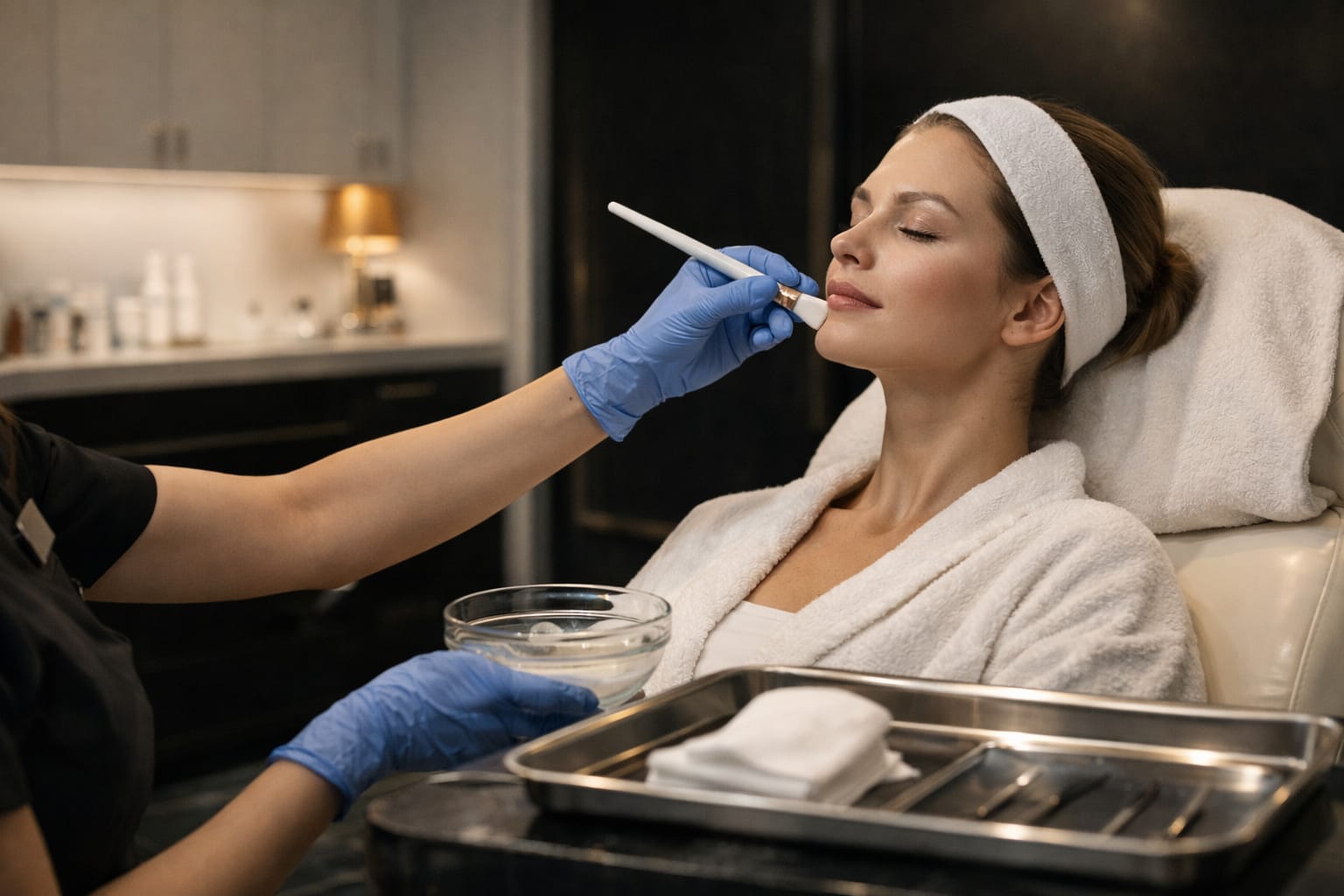
A typical chemical peel session includes:
- cleanse and degrease prep
- controlled active application with endpoint monitoring
- neutralization or timed removal based on protocol
- post-peel calming and barrier support
Sensation is often tingling or heat-like rather than severe pain.
First 72 hours aftercare priorities
In the immediate post-treatment window:
- avoid makeup where advised
- avoid heat, heavy sweating, and friction
- avoid strong actives and exfoliants
- maintain hydration and barrier support
- use broad-spectrum SPF consistently
This period strongly influences outcome quality.
Day 4-7 recovery guidance
As skin stabilizes:
- light dryness or flaking may occur
- avoid mechanical exfoliation
- reintroduce products only as advised
- continue strict UV protection
Premature product escalation can trigger irritation and prolong recovery.
Risks, safety and contraindications
Potential risks include:
- prolonged irritation
- post-inflammatory hyperpigmentation
- barrier disruption and delayed healing
- infection risk if aftercare is poor
Contraindications or deferral scenarios include:
- active infection or open lesions
- uncontrolled inflammatory dermatoses
- recent high-risk procedures or incompatible active use
Why outcomes vary between individuals
Variation depends on:
- baseline skin resilience
- pigmentation tendency
- peel selection and depth control
- post-treatment compliance
Protocol precision and aftercare adherence are the biggest controllable factors.
How we deliver peel protocols at J Luxe
At J Luxe, preparing for chemical peel is built into the treatment pathway.
Our process includes:
- suitability-first consultation
- indication-matched peel selection
- written pre- and post-care guidance
- review-led progression rather than fixed menus
This reduces risk and improves consistency.
Practical week-by-week planning framework
Clients usually do better when prep and recovery are planned as a timeline rather than isolated instructions.
7 days before treatment
- simplify to barrier-supportive skincare
- avoid new products and avoidable irritation triggers
- prioritize daily SPF and reduce UV load
- confirm timing around events, travel, and heat exposure
48 hours before treatment
- avoid unnecessary active exfoliation
- avoid procedures that add skin trauma
- hydrate and maintain routine consistency
Day of treatment
- arrive with clean skin and no unapproved actives
- follow clinician instructions for prep and post-care products
- align expectations with your selected peel depth
When timing is managed, recovery quality is usually better and anxiety is lower.
Common mistakes that compromise peel outcomes
Most avoidable complications come from behavior, not chemistry. Frequent issues include:
- overusing active skincare before treatment
- early makeup or heat exposure after treatment
- picking, rubbing, or forced exfoliation during flaking
- skipping SPF while skin is vulnerable
- changing products during early recovery without guidance
Why premature product use is risky
Reintroducing strong actives too early can prolong inflammation and increase pigment risk, especially in reactive or pigment-prone skin.
Why event timing matters
Booking peels too close to key events can create unnecessary pressure and poor decision making. Buffer time protects both recovery quality and outcome confidence.
Chemical peel FAQ
Can I wear makeup the day after?
Usually not advised. Most protocols recommend waiting until barrier recovery is sufficient, often around 48 hours or as clinically directed.
Is peeling mandatory for a treatment to work?
No. Visible peeling is not the only marker of efficacy. Controlled renewal can occur with limited visible shedding.
Should I stop all skincare before treatment?
Not all skincare, but high-irritancy actives are often reduced or paused. Barrier-supportive products are usually maintained.
Can I exercise the same day?
Heat and heavy sweating are usually avoided in the immediate post-treatment window to reduce irritation risk.
What if redness lasts longer than expected?
Mild variability is normal, but progressive or persistent inflammation should be reviewed clinically.
Is one peel enough?
For some concerns, one session gives visible improvement. For structural texture goals, a planned course often performs better.
Can peels treat deep acne scars alone?
Often not fully. Deeper scar architecture may require combination planning beyond peel monotherapy.
What should I ask before booking?
Ask about your risk profile, recommended peel depth, expected downtime, and the review process if healing is delayed.
Decision checklist before your first peel
Before proceeding, make sure you know:
- why this peel type is appropriate for your skin
- what normal healing should look like day by day
- what to avoid in the first 72 hours
- when to restart active skincare safely
- when and how to contact the clinic if concerns arise
Prepared clients usually experience safer recovery and more predictable outcomes.
Extended FAQ: preparation and aftercare precision
Why does pre-treatment routine simplification matter so much?
Simplification lowers baseline irritation and improves barrier resilience before controlled exfoliation. Starting treatment with an unstable barrier increases the chance of prolonged redness and poor tolerance.
Can I use retinoids right up to treatment day?
Usually no. Retinoid timing should be guided by your clinician based on skin sensitivity, peel depth, and current regimen.
Is visible peeling required for success?
No. Clinical success is measured by controlled renewal and skin-quality improvement, not maximum visible flaking.
What if I accidentally used an active product too close to treatment?
Tell your clinician before the peel. Protocol may need adjustment or deferral to reduce risk. Transparent reporting improves safety.
Can sunscreen really influence peel outcomes?
Yes. UV exposure during recovery can increase inflammation and pigment risk. Consistent SPF use is a core part of post-peel management.
Should I add new calming products immediately after treatment?
Only if advised. Introducing unfamiliar products during early recovery can create avoidable irritation and complicate troubleshooting.
Why is heat avoidance emphasized after peels?
Heat can amplify vasodilation and inflammation during a vulnerable period. Reducing heat load supports cleaner recovery and lowers irritation risk.
Can I pick or remove flaking skin to speed recovery?
No. Mechanical removal can disrupt barrier recovery and increase the risk of irritation, pigmentary change, or textural irregularity.
What if my skin remains sensitive beyond a week?
Persistent sensitivity should be reviewed clinically. Do not self-escalate active skincare until a clinician confirms readiness.
How often should peels be scheduled?
Frequency should be individualized based on indication, peel depth, and recovery behavior. Fixed intervals without review can reduce safety and consistency.
Are stronger peels always better?
No. Appropriate depth selection is usually more effective than maximal intensity. Over-aggressive peeling can increase risk without proportional benefit.
What should be documented at each session?
Treatment quality improves when protocol details, skin response, aftercare adherence, and review decisions are documented systematically.
Final clinical note on preparation quality
Clients who prepare deliberately usually heal more predictably and require fewer reactive adjustments. The highest-impact preparation principles are:
- clear preparation timelines
- realistic downtime planning
- disciplined aftercare
- barrier stability before treatment
- scheduling discipline over treatment intensity for first-time clients
These are core components of safe peel delivery and high-quality outcomes. When preparation quality is high, treatment decisions become clearer and long-term skin strategy is easier to optimize. Small decisions before treatment often have the largest effect on recovery quality after treatment. This approach usually improves tolerance while preserving measurable skin-quality gains.
Booking and next steps
Book a consultation if you want a clinically guided peel plan that prioritizes skin safety and measurable progress.
- Explore treatment options: Chemical Peels
- Speak with the team: Contact Us
- Want a local booking route? See Chemical Peels in Hackney London