How to choose the right aesthetic practitioner: what most people miss
If you are searching for how to choose aesthetic practitioner, you are probably already comparing clinics, Instagram pages, treatment prices, before-and-after photos, and reviews.
Those things matter, but they are not enough.
The NHS advises that anyone considering a cosmetic procedure should choose someone with the right training, skills, and insurance, and should book a consultation with the person who will do the procedure before making a final decision.[1]
That is a good starting point. But in real life, many people still choose based on the wrong signals: a glossy page, a discount, a celebrity-style result, or a practitioner who says yes quickly.
This guide explains the safety checks most people miss before booking Botox, dermal fillers, skin boosters, chemical peels, PRP, microneedling, fat dissolving injections, or other non-surgical cosmetic treatments.
Table of contents
- Quick answer: how to choose the right aesthetic practitioner
- Why the practitioner matters more than the treatment name
- Check 1: consultation quality
- Check 2: training, registration, and accountability
- Check 3: product transparency
- Check 4: complication planning
- Check 5: realistic results, not pressure selling
- Check 6: clinic standards and aftercare
- Red flags to avoid
- Questions to ask before booking
- Aesthetic practitioner FAQ
- Booking and next steps
Quick answer: how to choose the right aesthetic practitioner
The right aesthetic practitioner should be able to show:
- appropriate training for the treatment being offered
- clear professional accountability
- insurance for the procedure
- a proper consultation before treatment
- honest explanation of risks and limitations
- product transparency
- safe premises and hygiene standards
- clear aftercare and emergency guidance
- willingness to say no when treatment is unsuitable
A weak practitioner often sells the treatment before properly assessing you.
A strong practitioner assesses first, treats second.
Why the practitioner matters more than the treatment name
People often ask, "Is Botox safe?" or "Are fillers safe?"
A better question is: Who is assessing me, who is injecting me, what product are they using, and what happens if something goes wrong?
The same treatment can be low-risk in the right hands and much riskier in the wrong setting.
This is especially important because UK non-surgical aesthetics has historically had gaps in regulation. The UK government's consultation response on licensing non-surgical cosmetic procedures confirms that the Health and Care Act 2022 gives the Secretary of State power to bring in a licensing scheme in England for non-surgical cosmetic procedures, and that further work is needed to develop a proportionate licensing system.[2]
In plain English: the sector is moving toward stronger oversight, but clients still need to make careful choices today.
Check 1: consultation quality
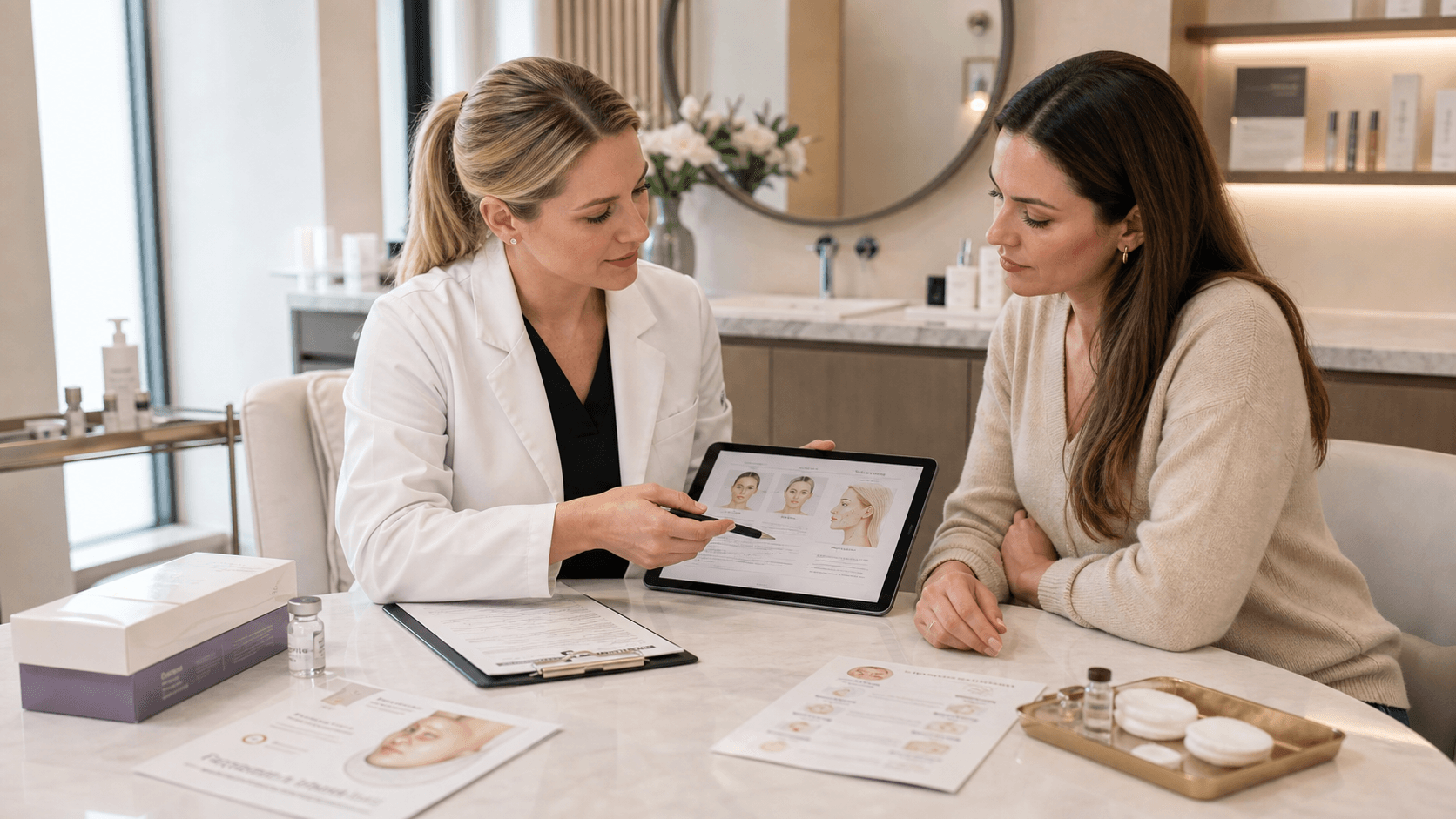
The consultation is where you learn the most about the practitioner.
The NHS says you should always book a consultation with the person who will perform the procedure before making your final decision, and ask about their experience, qualifications, training, complications, aftercare, and costs.[1]
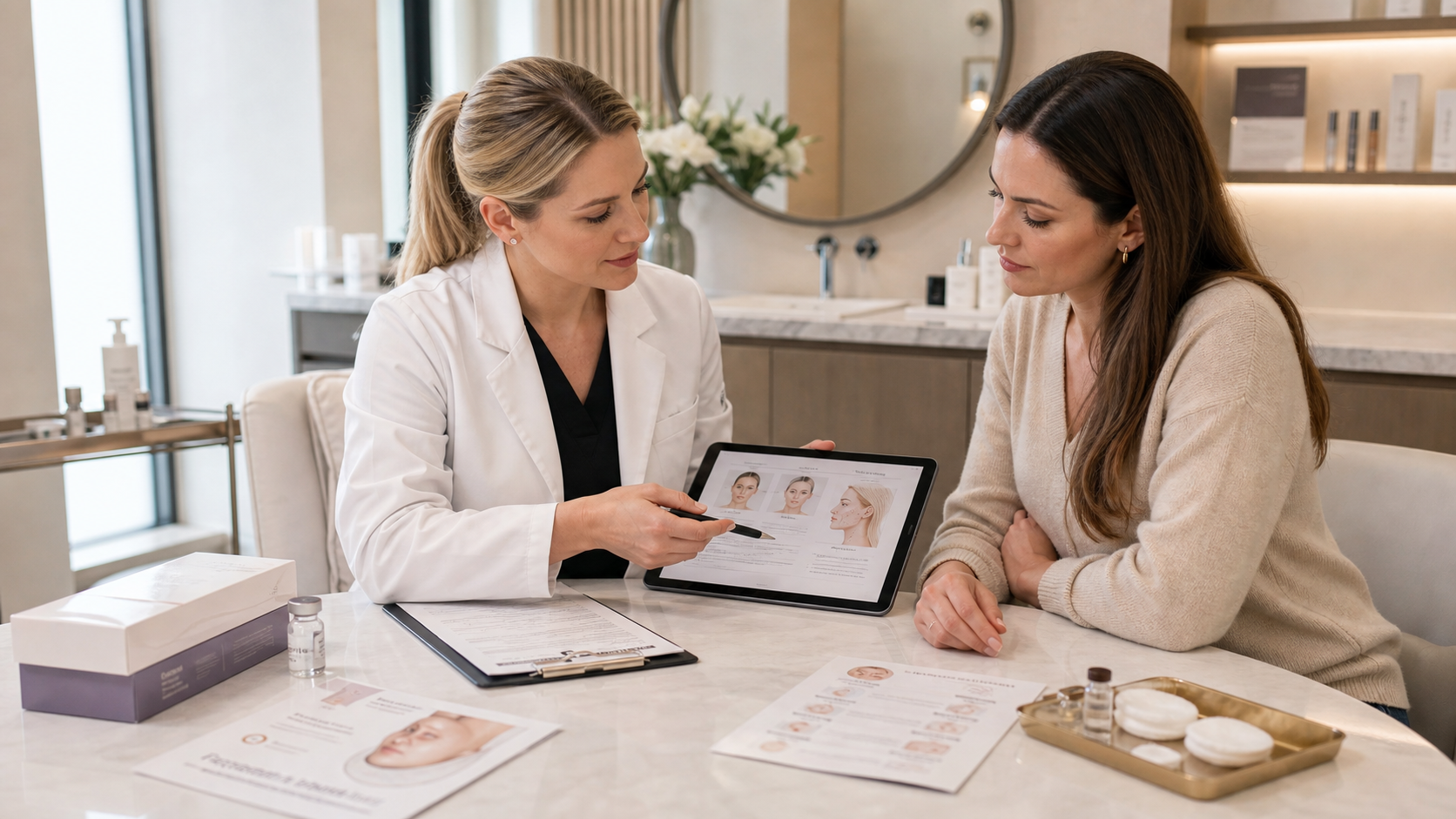
A good consultation should cover:
- your treatment goal
- medical history
- allergies
- medication
- previous aesthetic treatments
- pregnancy or breastfeeding considerations where relevant
- skin history
- contraindications
- realistic result expectations
- risks and complications
- aftercare
- alternatives
- cost and review plan
A rushed consultation is not a small issue. It is a warning sign.
If someone is ready to inject you before understanding your medical history, they are prioritising the sale over safety.
Check 2: training, registration, and accountability
Aesthetic training is not just about knowing where to inject.
It includes:
- anatomy
- product selection
- contraindications
- infection prevention
- consent
- complication recognition
- emergency response
- aftercare
- ethical decision-making
The CQC advises people considering cosmetic surgery that all cosmetic treatments, including non-surgical ones, can have risks, and says people can check whether a practitioner is on a voluntary register accredited by the Professional Standards Authority.[3]
The JCCP explains that its practitioner register is a voluntary register for practitioners working in cosmetic treatments who meet its standards and criteria, and that its practitioner and approved education registers are accredited by the Professional Standards Authority.[4]
Save Face also publishes accreditation standards for non-surgical cosmetic treatment providers. Its 2026 standards state that clinician and public safety and good customer care underpin its standards, and that its register is intended to signpost consumers to professional, safe, and ethical medical aesthetic treatment providers.[5]
These registers are not the only possible safety signal, but they are useful because they give clients something more concrete than Instagram popularity.
Check 3: product transparency
You should know what is being used in your face or body.
For injectables, a strong clinic should be able to explain:
- the product name
- why that product suits the area
- whether it is prescription-only, where relevant
- expected duration
- common side effects
- serious but less common risks
- what review or correction pathway exists
For skin treatments, ask about:
- peel strength or active ingredients
- device type where applicable
- needle depth for microneedling if relevant
- patch testing where relevant
- downtime
- contraindications
If a practitioner refuses to name the product, hides behind vague phrases like "premium filler," or cannot explain why they chose it, pause.
Product transparency is basic client protection.
Check 4: complication planning
Most people ask, "Will it look good?"
They should also ask, "What happens if it does not?"
For cosmetic interventions, GMC guidance for doctors says the practitioner must discuss the intervention, seek consent, and make sure patients have enough time and information before deciding.[6]
GMC guidance also says doctors must talk to patients about the potential adverse physical and psychological impact of the intervention going wrong or failing to meet expectations.[7]
Even if your practitioner is not a doctor, this is still a useful standard to expect from any serious clinic.
A good practitioner should be able to explain:
- common side effects
- urgent symptoms to watch for
- who to contact after treatment
- what the review process is
- whether correction is possible
- when medical escalation is needed
- what their complication protocol is
This matters most for injectable treatments such as dermal fillers, fat dissolving injections, skin boosters, and polynucleotides, where anatomy and tissue response matter.
If the answer is only "do not worry, nothing will go wrong," that is not reassurance. That is a red flag.
Check 5: realistic results, not pressure selling
The right practitioner does not sell you the most treatment.
They help you choose the most appropriate treatment.
A strong practitioner will explain:
- what can improve
- what cannot improve
- what might need a different treatment
- when not to treat
- how long results may take
- when to review
- why more product is not always better
The NHS advises avoiding practitioners who only advertise on social media, group treatments or events involving alcohol, treatment vouchers sold on group discount sites, and mobile services in private homes or hotels.[1]
Those warnings matter because aesthetics should not be impulse-led.
Cosmetic treatment decisions are better when there is time to think, ask questions, and compare options without pressure.
Check 6: clinic standards and aftercare
Aesthetic treatment is not only the injection or device moment.
It includes everything around it:
- cleanliness
- lighting
- sharps disposal
- clinical records
- consent documentation
- emergency contact details
- follow-up process
- product storage
- insurance
- complaint handling
The CQC says all cosmetic treatments, including non-surgical ones, can have risks.[3] That means aftercare is not optional.
Before booking, ask:
- Will I receive written aftercare?
- Who do I contact if I am worried?
- Is there a review appointment?
- What symptoms are urgent?
- What happens if I am unhappy with the result?
- Are correction costs explained clearly?
A clinic that disappears after payment is not a safe clinic.
Red flags to avoid
Avoid booking if you notice:
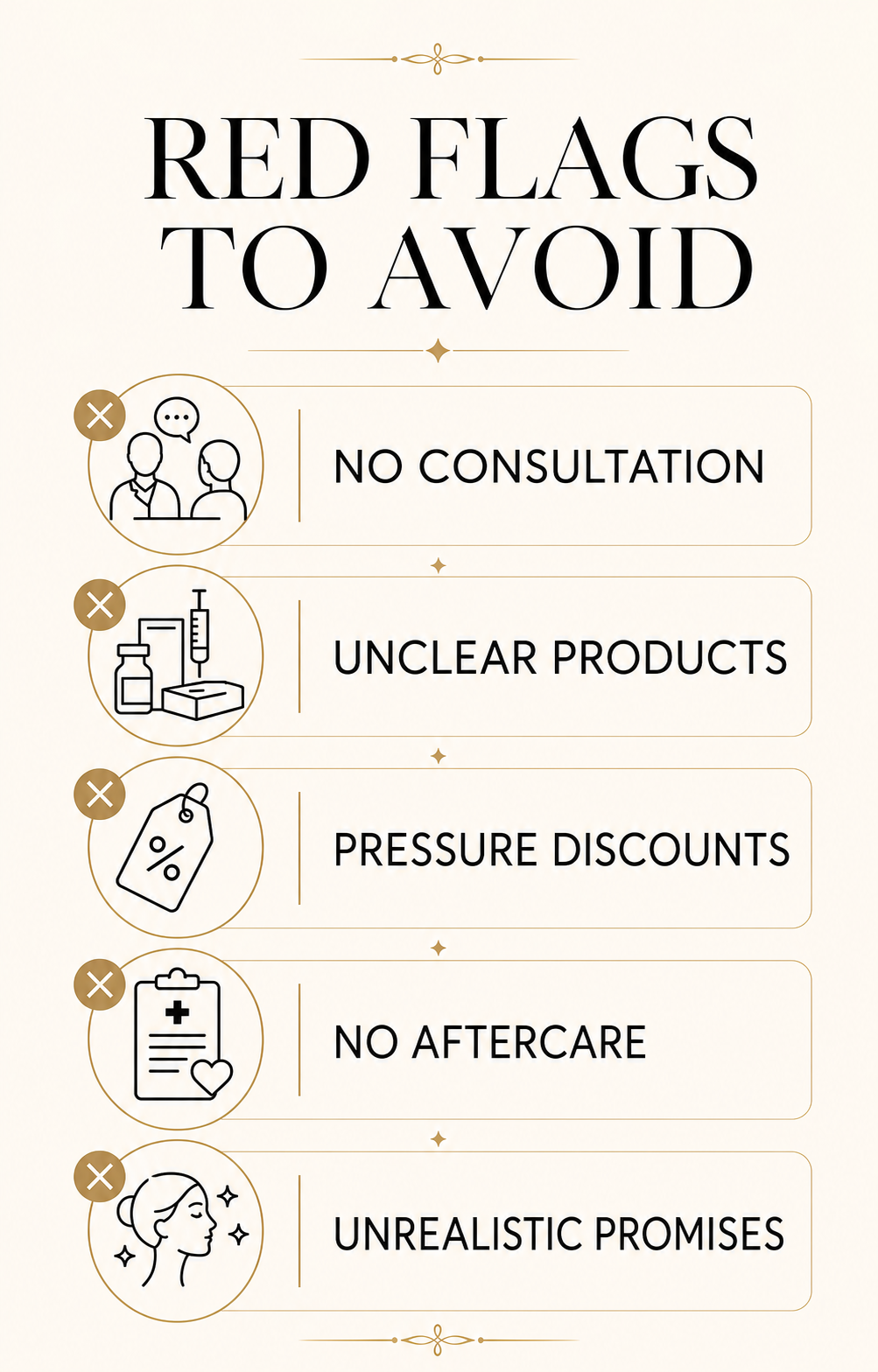
- no consultation before treatment
- no medical history questions
- no consent process
- no explanation of risks
- unclear product names
- heavy discounts for quick booking
- pressure to add more treatments
- treatment in a non-clinical setting
- no aftercare contact
- unrealistic before-and-after photos
- practitioner dismisses your concerns
- practitioner cannot explain complications
- practitioner says every client is suitable
The biggest red flag is not a messy room or a bad photo.
It is a practitioner who does not assess risk.
What most people miss
A good practitioner should sometimes say no
If every client is suitable, the assessment is not real.
Reasons to delay or decline treatment may include medical history, active infection, poor skin condition, unrealistic expectations, recent treatment, pregnancy or breastfeeding considerations, or signs that the client is not ready to make a calm decision.
Cheap treatment can become expensive
Low price may look attractive, but poor treatment can lead to correction costs, emotional stress, downtime, or medical care.
Price should make sense for the level of skill, product quality, consultation time, aftercare, and safety process involved.
Before-and-after photos are not proof by themselves
Photos can be affected by:
- lighting
- angles
- facial expression
- makeup
- swelling stage
- time between photos
- selective posting
- filters
Before-and-after images are helpful only when paired with honest context.
Personality is not the same as competence
A practitioner can be friendly, stylish, and confident but still not be the safest option.
Look for warmth plus structure: clear consultation, careful records, realistic advice, and proper aftercare.
The best treatment may be no treatment yet
Sometimes the safest plan is skincare first, medical review first, healing time first, or simply waiting.
That does not lose a client. It protects one.
Questions to ask before booking
Use this checklist before choosing an aesthetic practitioner:
- What training do you have for this treatment?
- Are you insured for this procedure?
- What product will you use and why?
- What are the common side effects?
- What are the serious risks?
- What happens if something goes wrong?
- Who provides my aftercare?
- How many sessions might I need?
- What result is realistic for my face or skin?
- What would make you advise against treatment?
- Is there anything I should do before or after treatment?
- What are the total costs, including review or correction if needed?
A confident practitioner should welcome these questions.
Aesthetic practitioner FAQ
Should I choose an aesthetic practitioner based on reviews?
Reviews are useful, but they should not be the only factor. Combine reviews with consultation quality, training, insurance, product transparency, and aftercare standards.
Is the best aesthetic practitioner always the most expensive?
No. Price alone does not prove safety or skill. But very low prices can be a warning sign if they are paired with rushed assessment, unclear products, or poor aftercare.
Should I choose a practitioner from Instagram?
Instagram can help you discover clinics, but it should not be your full safety check. The NHS specifically warns people to avoid practitioners who only advertise on social media.[1]
What should happen before Botox or filler?
You should have a consultation, medical history review, consent discussion, explanation of risks, realistic treatment plan, and aftercare instructions before treatment.
What if a practitioner says there are no risks?
Do not book. All cosmetic treatments can have risks, including non-surgical treatments, according to the CQC.[3]
Is it okay to book because there is a discount?
Discounts should never replace assessment. Avoid pressure-based offers that make you book quickly before you have had time to consider risks and suitability.
What makes a clinic feel safer?
A safer clinic usually has clear consultation systems, written aftercare, transparent product information, clinical hygiene, insurance, practitioner accountability, and a willingness to decline unsuitable treatment.
What should I do if I feel unsure after consultation?
Take time before deciding. The NHS says your practitioner should give you time after consultation to decide whether to go ahead.[1]
Final take: choose the practitioner before the treatment
The best aesthetic result starts before any needle, peel, device, or product touches your skin.
It starts with choosing the right person.
The right practitioner will:
- assess before recommending
- explain before treating
- document before proceeding
- plan for complications before they happen
- prioritise suitability over sales
- respect your face, skin, health, and long-term confidence
If you remember one thing, make it this: Do not choose the clinic that says yes fastest. Choose the practitioner who asks the best questions.
Booking and next steps
If you are considering injectables, skin treatments, body contouring, or advanced aesthetic care, start with a consultation-led approach.
- Explore treatments: Treatments
- Compare pricing: Pricing
- Ask the clinic team: Contact Us
Sources and references
- NHS. Choosing who will do your cosmetic procedure. https://www.nhs.uk/conditions/cosmetic-procedures/advice/choosing-who-will-do-your-procedure/
- GOV.UK. The licensing of non-surgical cosmetic procedures in England: consultation response. https://www.gov.uk/government/consultations/licensing-of-non-surgical-cosmetic-procedures/outcome/the-licensing-of-non-surgical-cosmetic-procedures-in-england-consultation-response
- Care Quality Commission. Choosing cosmetic surgery. https://www.cqc.org.uk/care-services/help-choosing-care/choosing-cosmetic-surgery
- Joint Council for Cosmetic Practitioners. The Public. https://www.jccp.org.uk/ThePublic
- Save Face. Save Face Standards for Accreditation. https://www.saveface.co.uk/en/publication/save-face-standards-for-accreditation/file/attachment
- General Medical Council. Cosmetic interventions: Communication, partnership and teamwork. https://www.gmc-uk.org/professional-standards/the-professional-standards/cosmetic-interventions/communication-partnership-and-teamwork
- General Medical Council. Explaining risks and seeking informed consent. https://www.gmc-uk.org/professional-standards/learning-materials/seeking-informed-consent