Botox gone wrong: what causes it and how to avoid it
If you are searching for Botox gone wrong, you are probably trying to answer one important question: How do bad Botox results happen, and how do I avoid becoming one of those stories?
The short answer is that Botox problems can happen for different reasons. Sometimes the issue is mild and temporary, such as bruising, asymmetry, or a droopy eyelid. Sometimes the problem is bigger, such as incorrect assessment, poor injector technique, wrong dosing, counterfeit product, or treatment in an unsafe setting.
The NHS states that botulinum toxin injections such as Botox or Dysport are prescription-only medicines and can only be prescribed after a consultation with a healthcare professional.[1]
That already tells you something important: safe Botox is not supposed to be casual.
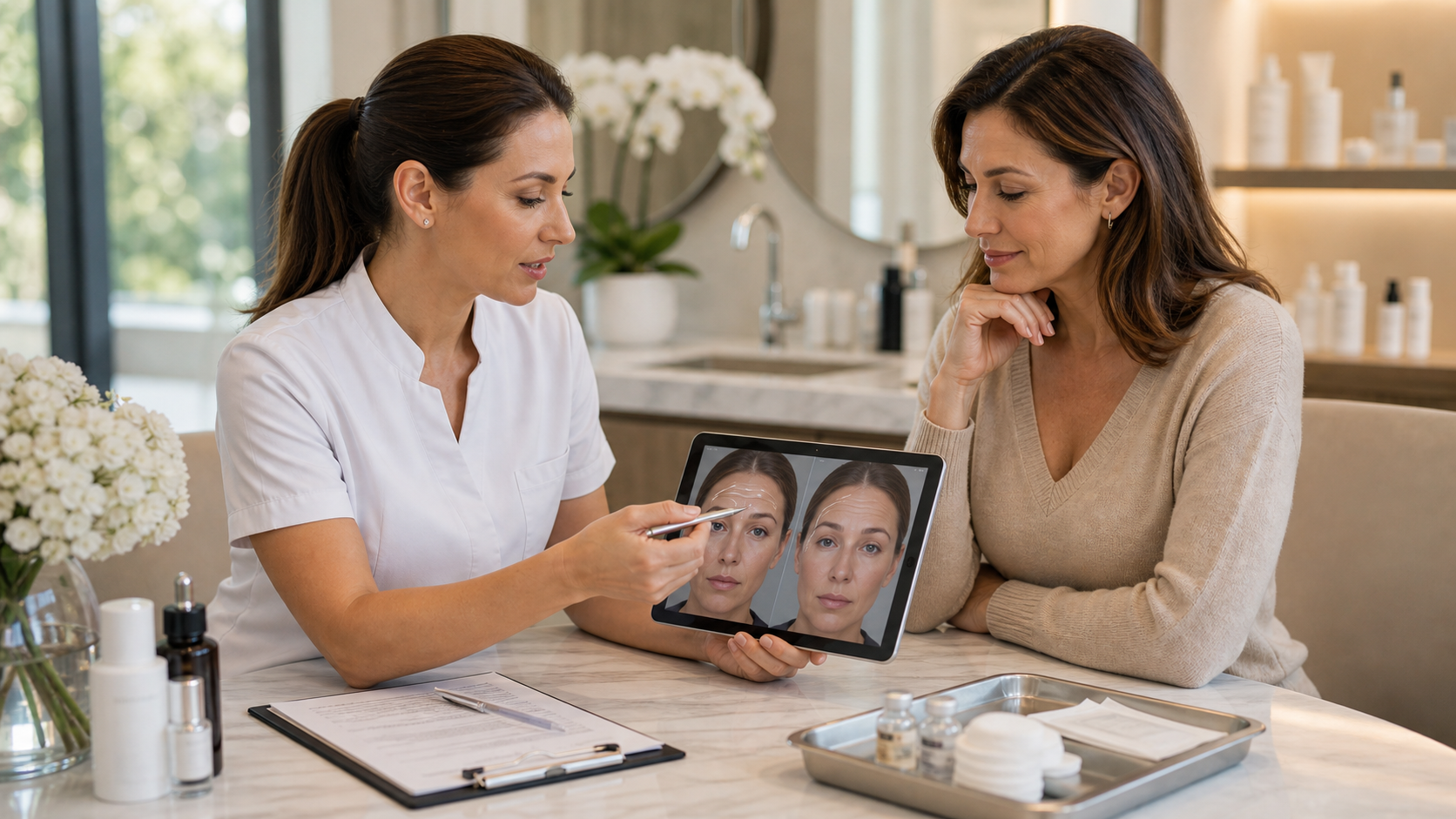
This guide explains what “Botox gone wrong” usually means, what causes it, the warning signs to take seriously, and how to lower your risk before booking treatment.
Table of contents
- Quick answer: what Botox gone wrong usually means
- What bad Botox can actually look like
- What causes Botox to go wrong
- Mild side effects vs warning signs
- Why bad Botox is often a practitioner problem
- How to avoid Botox gone wrong
- What to do if you think your Botox has gone wrong
- Botox gone wrong FAQ
- Booking and next steps
Quick answer: what Botox gone wrong usually means
In most everyday cases, “Botox gone wrong” means one of these:
- droopy eyelid
- heavy brow
- asymmetrical eyebrow shape
- over-frozen forehead
- crooked smile
- results that look unnatural
- bruising or swelling that worried the client
- treatment that did not match the client’s goals
Mayo Clinic notes that unwanted results from Botox injections can include pain, swelling or bruising at the injection site, headache or flu-like symptoms, droopy eyelids, crooked eyebrows, crooked smile, drooling, watery or dry eyes, and infection at the injection site.[2]
That is different from a rare but more serious toxin-related complication.
FDA-approved botulinum toxin products carry a boxed warning for possible distant spread of toxin effect, which can lead to symptoms such as swallowing or breathing difficulties.[3]
So there are really two conversations here:
- common disappointing or unattractive outcomes
- rare but serious medical complications
Both matter.
What bad Botox can actually look like
People often use the phrase bad Botox for any result they dislike, but not every disappointing result is a dangerous complication.
Common examples include:
- forehead that feels too flat or stiff
- brows that sit lower than expected
- one brow lifting higher than the other
- eyelid droop after treatment
- lines still showing because dosing was too conservative or the pattern was incomplete
- smile imbalance when the lower face is treated badly
- a result that technically “worked” but does not suit the face
These issues can feel dramatic when they happen to your own face, even if they are temporary.
The emotional side matters too. If someone booked Botox for confidence and comes away looking tired, heavy, or unlike themselves, that still counts as a bad outcome from the client’s point of view.
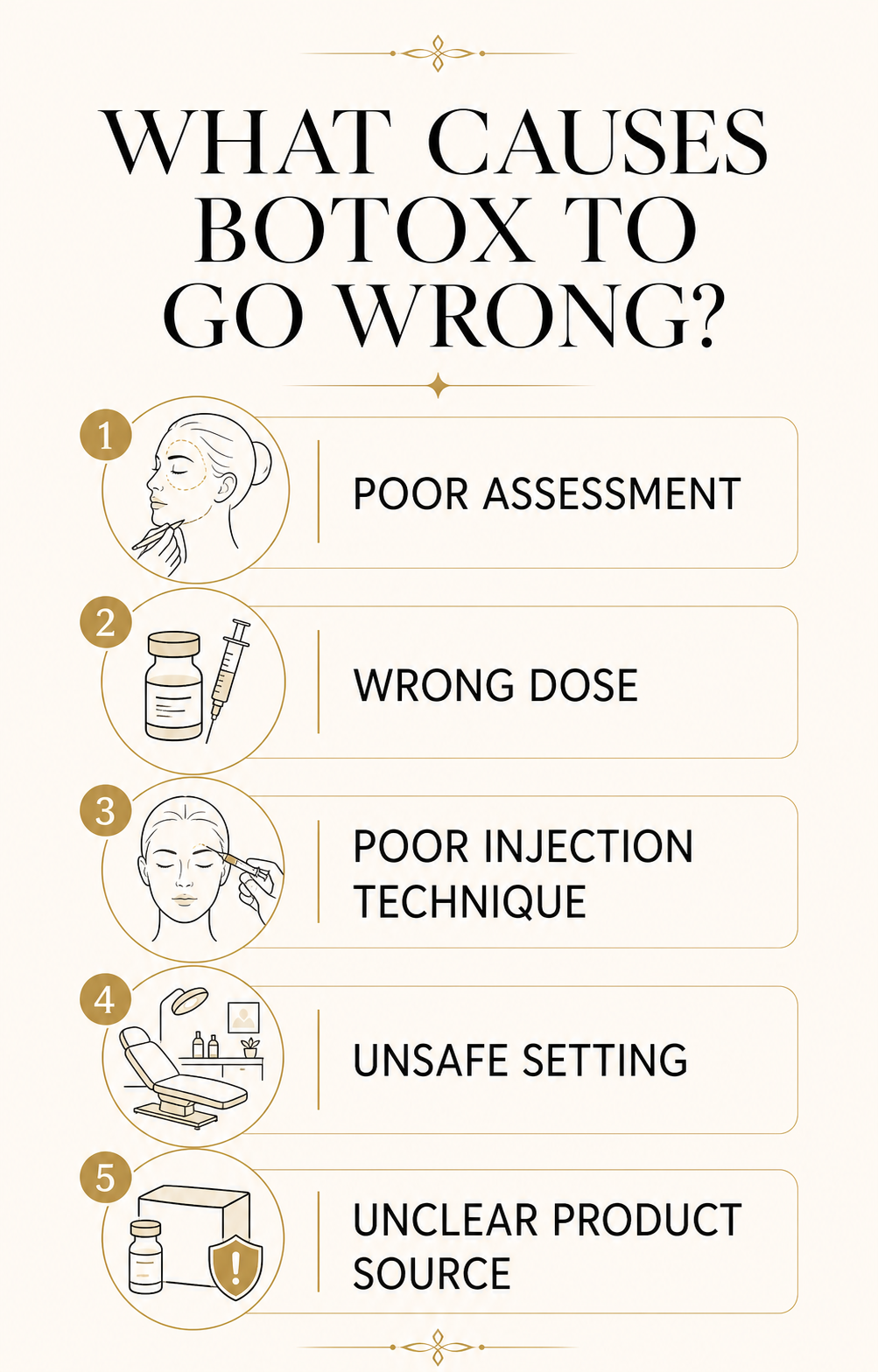
What causes Botox to go wrong
1. Wrong assessment before treatment
Good Botox starts before the injection.
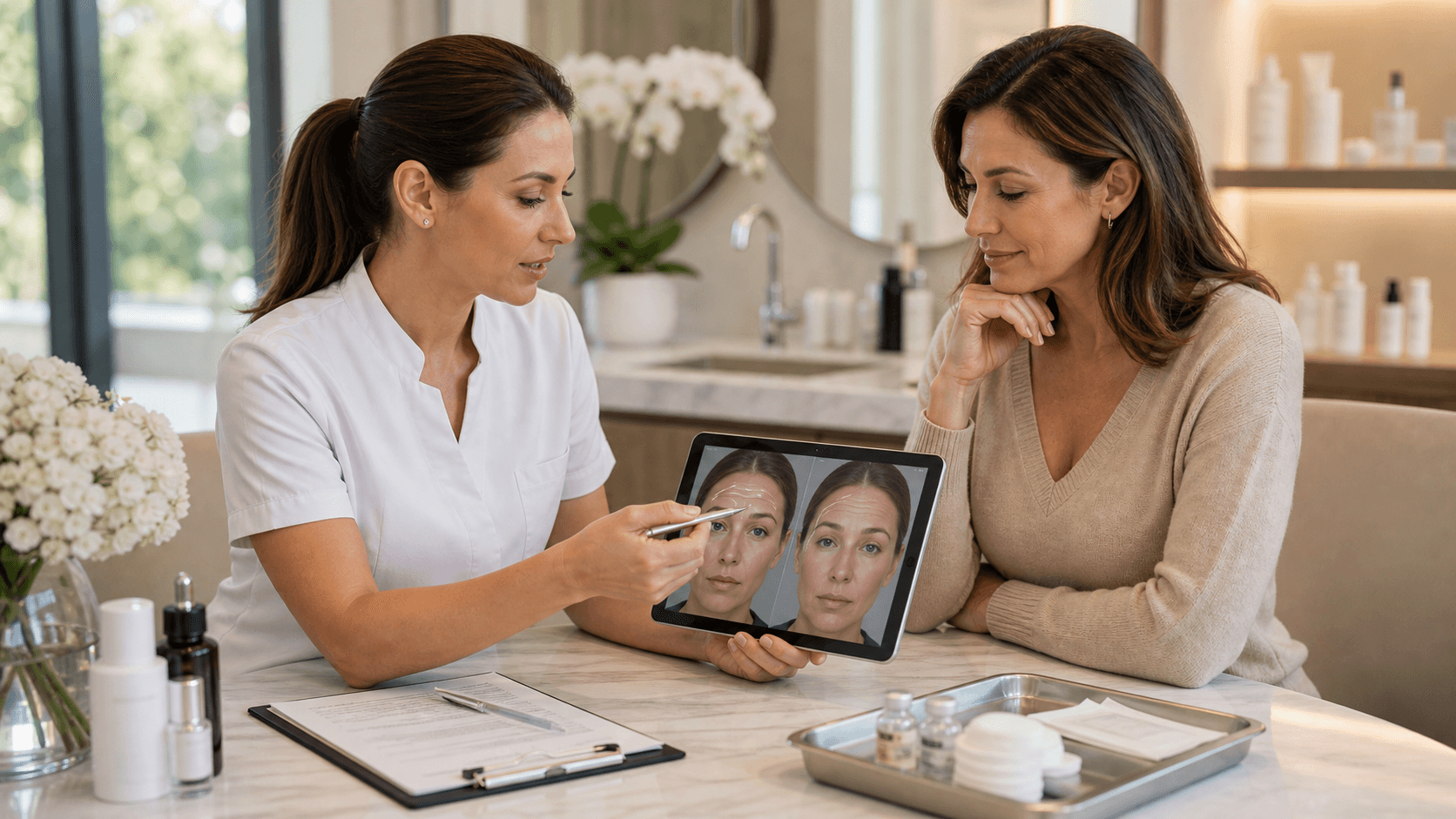
If a practitioner does not assess your baseline brow position, eyelid strength, facial movement, asymmetry, and treatment goal, the plan may already be weak.
For example:
- someone with naturally heavy lids may be more vulnerable to a heavy-looking forehead result
- someone with pre-existing asymmetry may need a more tailored plan
- someone asking for “frozen” results may later regret how unnatural it feels
Bad planning often looks like bad injecting, but the mistake started earlier.
2. Poor injection technique
Botox is not only about what product is used. It is also about:
- placement
- depth
- dose
- dilution approach
- how the practitioner balances different muscles
If injection points are poorly chosen, nearby muscles can be affected in ways the client did not want. That is one reason droopy eyelids, heavy brows, and odd facial balance can happen.
3. Wrong dose for the face
Too much toxin can create a flat, heavy, or over-frozen result. Too little can create patchy movement, under-correction, or uneven outcomes.
Botox should not be treated like one-size-fits-all. The right dose depends on anatomy, muscle strength, treatment history, and goal.
4. Treating the wrong area for the wrong reason
Some lines are caused by muscle movement. Others are caused by skin quality, volume loss, sun damage, or facial structure.
If the concern is not mainly movement-related, Botox may not solve it properly. That can lead to disappointment even if the injections were technically fine.
5. Unsafe or counterfeit product
The FDA warned in 2024 and 2025 about illegal marketing of unapproved or counterfeit Botox-related products and noted that serious adverse events have included symptoms consistent with botulism.[4][5]
CDC also reported illnesses in women who received botulinum toxin injections in nonmedical settings, with some cases linked to counterfeit product.[6]
This is one of the biggest reasons cheap, informal, or untraceable treatment should be taken seriously.
6. Treatment in nonmedical settings
Botox should not be treated like a party treatment.
The NHS says to avoid treatment vouchers sold on group discount websites, group treatments or events where alcohol is available, and mobile services where treatment is carried out in private homes or hotels.[1]
That advice exists for a reason. Bad Botox becomes more likely when the setting is rushed, sales-led, or weak on accountability.
Mild side effects vs warning signs
It helps to separate normal short-term effects from signs that need closer attention.
Mild short-term effects
These can happen even when treatment is done properly:
- small bruises
- mild swelling
- tenderness at injection points
- slight headache
- temporary tight feeling
These do not automatically mean the treatment has gone wrong.
Results-related problems
These are more in the “bad outcome” category:
- droopy eyelid
- heavy brow
- uneven brow movement
- smile imbalance
- unnatural stiffness
- a result that does not fit the face
These are often temporary, but they still matter and should be reviewed.
Urgent warning signs
FDA labeling and CDC guidance both make clear that spread of toxin effect can produce more serious symptoms, including weakness, vision problems, difficulty speaking, difficulty swallowing, and breathing problems.[3][7]
Urgent medical attention is needed if symptoms suggest more than a normal cosmetic side effect.
That includes:
- difficulty swallowing
- breathing difficulty
- severe muscle weakness
- major visual symptoms
- concerning systemic symptoms after injection
Serious complications are rare, but “rare” is not the same as impossible.
Why bad Botox is often a practitioner problem
Most people focus on brand names.
But from a client safety perspective, the bigger question is usually: who assessed you, who prescribed, who injected, and what happens if something goes wrong?
The NHS says you should book a consultation with the person who will do the procedure before making your final decision, and that they should have the right training, skills, and insurance.[8]
That matters because many bad Botox stories are really stories about:
- weak consultation
- poor practitioner selection
- inappropriate setting
- unclear accountability
- rushed prescribing
- price-led decisions
In other words, “Botox gone wrong” is often not just about Botox. It is about the treatment pathway around it.
How to avoid Botox gone wrong
Choose the practitioner before the price
Cheap treatment can become expensive very quickly if correction, stress, time, or medical review is needed afterward.
Make sure there is a real consultation
You should be asked about:
- your goals
- previous treatment
- medical history
- allergies
- medications
- facial asymmetry
- eyelid or brow heaviness
- when not to treat
If the consultation feels like a formality, the risk is higher.
Ask exactly what product is being used
You should not be injected with a mystery product.
Ask:
- what is being used
- who prescribed it
- why it suits your treatment area
- what the expected side effects are
- what the review plan is
Avoid nonclinical settings
The CDC report on 2024 cases involved cosmetic injections in nonmedical settings.[6] That is not where you want to discover a problem.
Be careful with “frozen” goals
Very dramatic or trend-led Botox requests can push treatment away from facial balance and toward regret.
Natural movement with softened lines is often safer and more flattering than chasing no movement at all.
Respect review timing
Judging Botox too early causes unnecessary panic.
Many results settle over days, with fuller effect appearing around the two-week window rather than immediately.
Pick someone who can say no
A serious practitioner should sometimes decline or delay treatment.
That may happen because of:
- unsuitable anatomy for the requested plan
- unrealistic expectations
- medical concerns
- recent treatment
- signs the client is not ready to decide calmly
If every request gets a yes, the assessment may not be protecting you.
What to do if you think your Botox has gone wrong
1. Do not panic too early
Some early worry is caused by normal bruising, tightness, or temporary imbalance before the result settles.
2. Contact the treating clinic
You need proper review, not guesswork from social media.
Ask:
- whether the result is within normal settling range
- whether review timing is appropriate
- what symptoms are expected
- what symptoms are urgent
3. Get urgent medical help for serious symptoms
If you develop swallowing difficulty, breathing difficulty, major weakness, or other concerning systemic symptoms, seek urgent medical help.
4. Document what was used
Keep:
- treatment date
- clinic name
- practitioner name
- product name if known
- symptoms
- photos over time
That is useful if follow-up, correction, or medical review becomes necessary.
5. Learn from the pathway, not just the result
If the outcome was poor, ask what part failed:
- assessment
- injector choice
- product source
- setting
- communication
- aftercare
That is how you reduce the chance of repeating the same problem.
Botox gone wrong FAQ
How long does bad Botox last?
Many unattractive cosmetic outcomes, such as heaviness or asymmetry, improve as the toxin effect wears off over time. The exact duration depends on area, dose, and individual response.
Can a droopy eyelid after Botox happen?
Yes. Mayo Clinic lists droopy eyelids among possible unwanted results.[2] It can be distressing, which is why treatment planning and injector technique matter so much.
Is Botox gone wrong always dangerous?
No. Many cases are disappointing but temporary cosmetic outcomes rather than dangerous medical events. But serious warning symptoms should never be ignored.
What are the most serious Botox warning signs?
FDA and CDC sources highlight symptoms such as muscle weakness, vision problems, difficulty speaking, difficulty swallowing, and breathing problems as more serious concerns.[3][7]
Can fake Botox cause problems?
Yes. FDA and CDC have both reported serious issues linked to counterfeit or unapproved botulinum toxin products.[4][5][6]
Can bad Botox be avoided completely?
No treatment is zero-risk. But risk can be lowered a lot with proper consultation, qualified prescribing and injecting, safe settings, product transparency, and realistic expectations.
Should I book Botox at a party, hotel, or home visit?
The NHS advises avoiding group treatments, alcohol-linked treatment events, and mobile services carried out in private homes or hotels.[1]
Final take: most bad Botox is preventable
When people search Botox gone wrong, they often imagine a random horror story.
In reality, many bad outcomes follow a pattern:
- rushed consultation
- weak assessment
- poor injector choice
- unsafe setting
- unclear product source
- trend-led goals instead of face-led planning
That is why prevention starts before the first injection.
The best way to avoid bad Botox is not luck. It is choosing a treatment pathway built around safety, anatomy, product transparency, and honest review.
Booking and next steps
If you are considering anti-wrinkle treatment, start with assessment so your facial movement, anatomy, goals, and suitability can be reviewed properly.
- Explore treatment details: Anti-Wrinkle Injection
- Compare options and pricing: Pricing
- Ask the clinic team first: Contact Us
Sources and references
- NHS. Choosing who will do your cosmetic procedure. https://www.nhs.uk/tests-and-treatments/cosmetic-procedures/advice/choosing-who-will-do-your-procedure/
- Mayo Clinic. Botox injections. https://www.mayoclinic.org/tests-procedures/botox/about/pac-20384658
- FDA. HIGHLIGHTS OF PRESCRIBING INFORMATION: BOTOX. https://www.accessdata.fda.gov/drugsatfda_docs/label/2024/103000s5316s5319s5323s5326s5331lbl.pdf
- FDA. FDA Warns Companies Over Illegal Marketing of Botox and Related Products. https://www.fda.gov/news-events/press-announcements/fda-warns-companies-over-illegal-marketing-botox-and-related-products
- FDA. Counterfeit Version of Botox Found in Multiple States. https://www.fda.gov/drugs/drug-alerts-and-statements/counterfeit-version-botox-found-multiple-states
- CDC. Illnesses After Administration of Presumed Counterfeit Botulinum Toxin in Nonmedical Settings. https://www.cdc.gov/mmwr/volumes/73/wr/mm7327a3.htm
- CDC. About Botulism. https://www.cdc.gov/botulism/about/index.html
- NHS. Before you have a cosmetic procedure. https://www.nhs.uk/tests-and-treatments/cosmetic-procedures/advice/before-you-have-a-cosmetic-procedure/